Skip to content
kailogo
  • Home
  • Highlights
  • Activities
    • Talks at International Conferences
    • Video Recordings
    • Publications
  • Blog
    • Analytics
    • Cloud
    • Internet of things
    • Integration
    • Stream Processing
  • About ME
  • Stay in Contact
  • Home
  • Highlights
  • Activities
    • Talks at International Conferences
    • Video Recordings
    • Publications
  • Blog
    • Analytics
    • Cloud
    • Internet of things
    • Integration
    • Stream Processing
  • About ME
  • Stay in Contact
Get Started
API Management, Cloud, Cloud-Native, Docker, EAI, ESB, Microservices, Middleware, SOA

Hybrid Integration Architecture is the New Default

  • August 5, 2016

The IT world is moving forward fast. The digital transformation changes complete industries and peels away existing business models. Cloud services, mobile devices and the Internet of Things establish wild spaghetti architectures though different departments and lines of business. Several different concepts, technologies and deployment options are used. A single integration backbone is not sufficient anymore in this era of integration. Therefore, a Hybrid Integration Architecture is getting the new default in most enterprises.

Different user roles need to leverage different tools to integrate applications, services and APIs for their specific need. A key for success is that all integration and business services work together across different platforms in a hybrid world with on premise and cloud deployments.

Hybrid Integration Platform

“Hybrid Integration Platform (HIP)” is a term coined by Gartner and other analysts. It describes different components of a modern integration architecture.

One of the keys for success in today’s more and more complex world is that different platforms work together seamlessly. Different components share interfaces and metadata and allow consolidated operations management. API Management is often used as a mediator between interfaces to encourage an agile and innovative enterprise culture – internally; as well as between partners; and for public external communication.

Leveraging a well-conceived hybrid integration architecture allows different stakeholders of an enterprise to react quickly to new requirements. Mission critical core business processes (also called “core services”) are still operated by the central IT department and change rather infrequently. On the other side, the line of business needs to try out new business processes quickly, or adapt existing ones, in an agile way without being delayed by frustrating rules and processes governed by the central IT. Innovation by a “fail-fast” strategy and creating so called “edge services” is getting more and more important to enhance or disrupt existing business models.

The following picture shows possible components of a Hybrid Integration Platform:
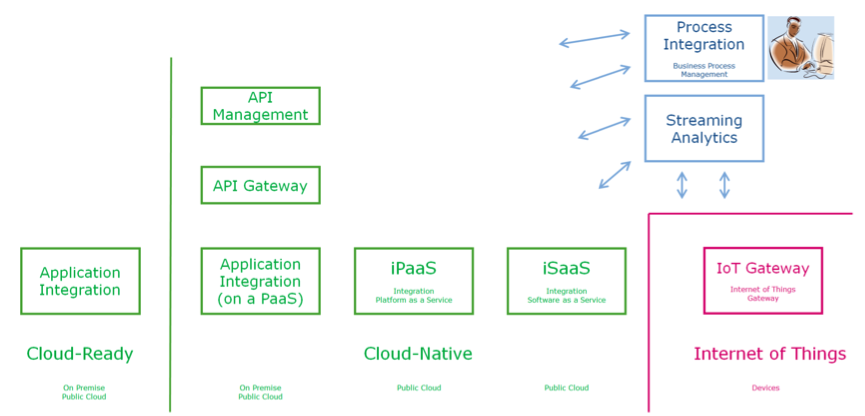
2016_Hybrid_Integration_Architecture

If you want to learn more about all these components and how they relate to cloud-native concepts like microservices and containers, please take a look at the Voxxed article “The Need for a Hybrid Integration Architecture“.

 

Total
0
Shares
Share 0
Tweet 0
Pin it 0

Dont‘ miss my next post. Subscribe!

We don’t spam! Read our privacy policy for more info.
If you have issues with the registration, please try a private browser tab / incognito mode. If it doesn't help, write me: kontakt@kai-waehner.de

Check your inbox or spam folder to confirm your subscription.

Share this post :
Picture of Kai Waehner
Kai Waehner
bridging the gap between technical innovation and business value for real-time data streaming and applied AI.

Popular Categories

  • Apache Kafka
  • Analytics
  • Uncategorized
Get free tips and resources right in your inbox, along with 10,000+ others

Latest Post

dbt Meets Open Source Apache Flink Plugin - One Data Engineering SQL Tool for ETL Integration in Batch and Streaming
dbt Meets Apache Flink: One Workflow for Data Engineers on Snowflake, BigQuery, Databricks, and Confluent
26. March 2026
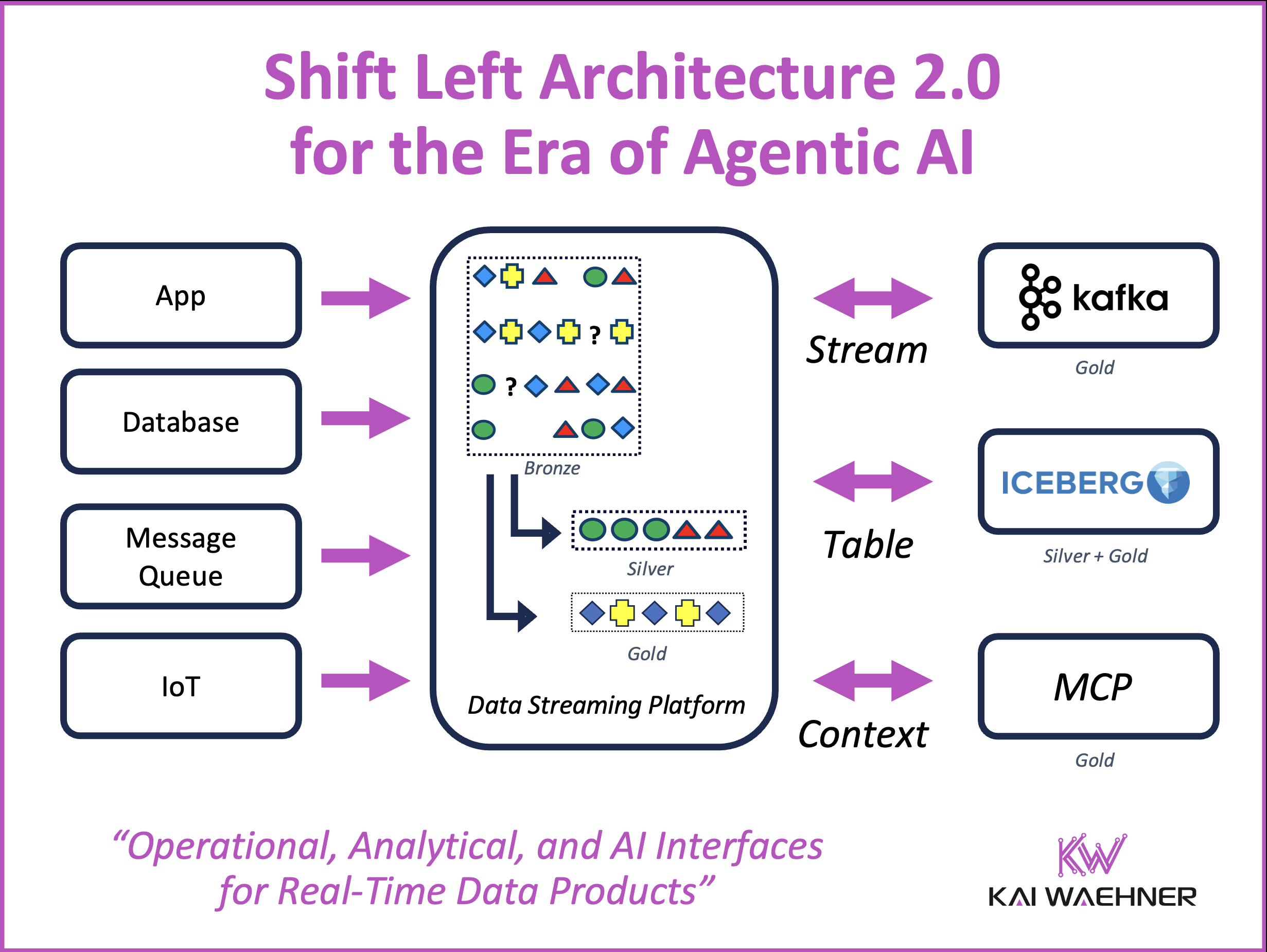
Shift Left Architecture 2.0 for the Era of Agentic AI with Kafka Flink Iceberg and MCP
The Shift Left Architecture 2.0: Operational, Analytical and AI Interfaces for Real-Time Data Products
23. March 2026
UFC VIP Experience - Fan Review - Business Perspective - Tech Vision
UFC VIP Experience Worth the Price? Fan Review. Business Perspective. Tech Vision.
22. March 2026
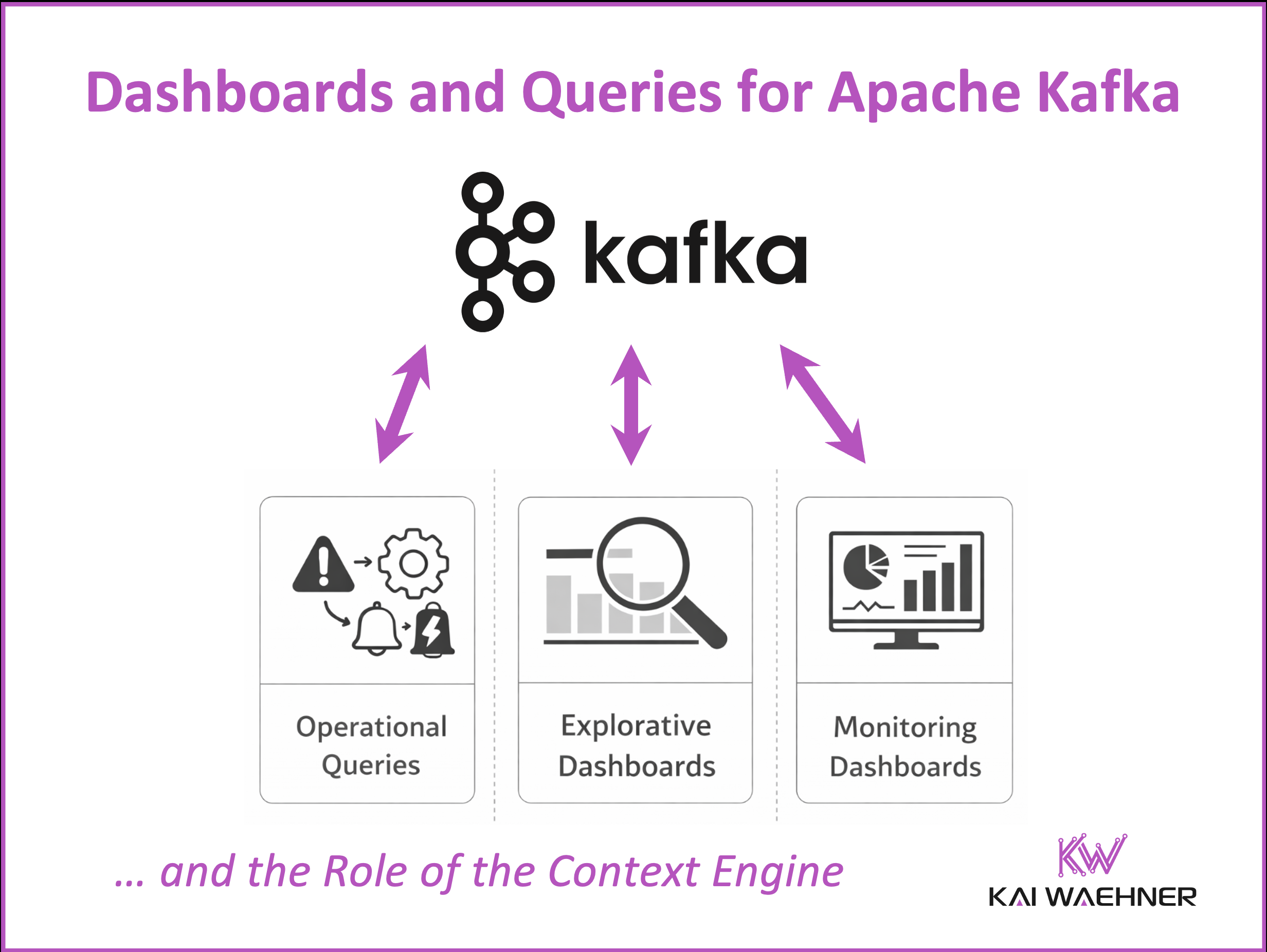
Dashboards and Queries for Apache Kafka and the Role of Context Engine for Agentic AI and Humans
Dashboards and Queries for Apache Kafka: Operational, Explorative, and the Role of the Context Engine
12. March 2026
Data Streaming and AI Telco Trends at MWC 2026 in Barcelona
Data Streaming at MWC 2026: How Apache Kafka, Flink and Agentic AI Power Telecom Trends
3. March 2026
Qantas Airline Data Streaming Platform with Apache Kafka for Airline Operations
From Takeoff to Touchdown: Real-Time Aviation with Data Streaming at Qantas
16. February 2026
logo_digimax.png
Transforming Ideas into Digital Excellence. Elevate your online presence with our innovative solutions and strategic digital services.
Facebook-f Dribbble Instagram Linkedin-in Youtube
Services
  • Website Development
  • App Development
  • Digital Marketing
  • Graphic Design
  • Brand Identity
  • Search Engine Optimization
Support
  • Help Center
  • FAQ
  • Ticket Support
  • Sales Support
  • Contact us
Company
  • About us
  • Our Team
  • Careers
  • Article & News
  • Legal Notices
Copyright© 2026 DigiMax, All rights reserved. Powered by MoxCreative.
  • Term of use
  • Privacy Policy
  • Cookie Policy